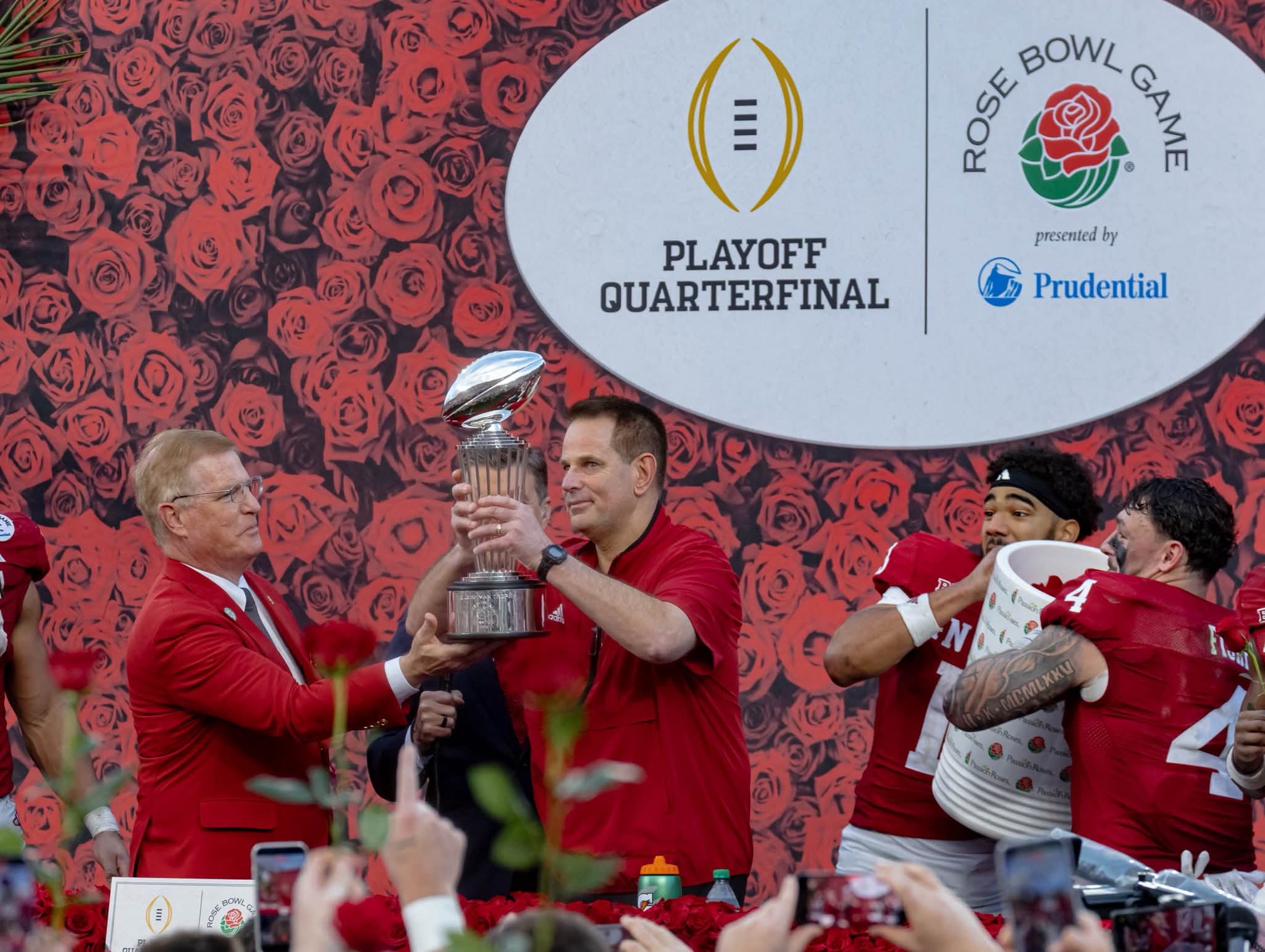
Pasendena, CA—–A steady rain fell over Pasadena the night before kickoff, but by New Year’s Day afternoon, Indiana football was the only thing washing away history.
The Rose Bowl had never been kind to teams in Indiana’s position. College Football Playoff squads coming off first-round byes had yet to win, and the Hoosiers themselves carried the weight of a long and difficult past — entering the season as the program with the most losses in college football history. Their lone previous Rose Bowl appearance ended in defeat to USC in 1968.
For decades, Indiana lived at the bottom of the Big Ten standings. That narrative no longer applies.
Behind first-year head coach Curt Cignetti and a revitalized offense led by Heisman Trophy winner Fernando Mendoza, the Hoosiers have undergone a dramatic transformation. After shaking off early rust from a three-week layoff, No. 1 Indiana dominated No. 9 Alabama, cruising to a 38–3 victory Thursday afternoon in front of 90,278 fans. The loss marked the largest postseason defeat in Crimson Tide history.
Asked moments after the game how his team avoided being overwhelmed by the Rose Bowl stage, Cignetti pushed back on the premise.
“Why should it be too big?” he said. “Because our name’s Indiana? … We’ve come through in clutch moments. I’m proud of the way they responded.”
Indiana set the tone early. Mendoza connected with Charlie Becker on a 21-yard touchdown pass to open a 10–0 lead, marking the first Rose Bowl touchdown ever scored by a Hoosier — a symbolic breakthrough that reflected the afternoon to come.
The defense followed with a defining stand in the second quarter. Facing fourth-and-one at the Indiana 34, Alabama attempted deception. Cignetti called timeout when the Tide lined up in a trick formation. After failing to draw the Hoosiers offsides and burning a timeout, Alabama ran a fourth-down play anyway.
Receiver Germie Bernard took a short pass from running back Daniel Hill, but Indiana defenders Isaiah Jones and Rolijah Hardy swarmed him immediately, stopping the play for no gain and forcing a turnover on downs.

Indiana fans had already made the Rose Bowl feel like home. Waves of crimson filled the stands, booing at every mention of Alabama and chanting loudly as the rain clouds cleared. By halftime, “Who’s your daddy?” echoed throughout the stadium.
Offensively, Cignetti leaned heavily on the run to wear down the Tide, then struck through the air with precision. Mendoza was nearly flawless, completing 14 of 16 passes for 192 yards and three touchdowns without an interception. Though sacked three times, he remained composed throughout.
“That’s how you break a team,” Cignetti said, referencing lessons from his early coaching days at Alabama. “You run the football, you change the way they think. It doesn’t happen right away — it happens later, when their will starts to go.”
Mendoza also contributed with his legs. In the third quarter, he scrambled for an eight-yard gain on a broken play, then followed it with a 24-yard touchdown strike to Elijah Sarratt that pushed the lead to 24–0. He finished with 38 rushing yards.
Indiana’s defense neutralized Alabama quarterback Ty Simpson, who lost a first-half fumble and struggled against tight coverage. Simpson later revealed he suffered a cracked rib on a first-half hit, sidelining him for much of the game. Backup quarterback Austin Mack threw for 103 yards, including a 34-yard completion that set up Alabama’s only points — a 28-yard field goal.
The Hoosiers continued to pour it on. Kaelon Black capped the scoring with a 25-yard rushing touchdown, finishing with 99 yards on the ground as Indiana closed out a commanding 31–3 lead before adding a late score to seal the 38–3 final.
As the skies cleared over Pasadena, Indiana’s path forward became clear. The Hoosiers now head to the Peach Bowl to face No. 5 Oregon, one step closer to the ultimate prize — a national championship.